


Advanced CNC Press Brake & Forming Equipment
Our press brake and forming capabilities are supported by a diverse lineup of CNC and mechanical equipment, allowing us to handle a wide range of part sizes, materials, and production volumes. This equipment mix gives us flexibility, redundancy, and consistent throughput, whether you’re running prototypes or repeat production.
CNC Press Brakes & Forming Systems
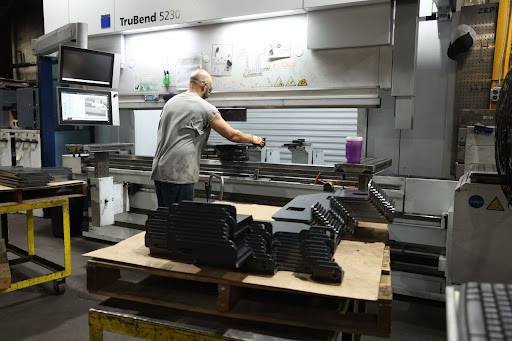
- Trumpf TruBend 5320, 5230, and 7050 – High-precision CNC press brakes supporting long-length forming, tight tolerances, and repeatable production across varying material thicknesses.
- Amada HDS 8025 – Hybrid-drive CNC press brake designed for accuracy, energy efficiency, and consistent bend quality.
Mechanical Press Brakes
- Multiple mechanical press brakes – Used to support high-volume runs, secondary forming operations, and production overflow, helping maintain schedules and lead times.
This combination of CNC and mechanical equipment allows us to:
- Match the right machine to the job
- Maintain consistent quality across runs
- Reduce bottlenecks during peak production
- Support both short-run and production-scale work
What We Form
Press brake forming is ideal for a wide range of sheet metal and plate fabrication needs. We commonly support parts used in manufacturing, industrial equipment, structural builds, OEM production, and custom assemblies-anywhere accurate bends and repeatable geometry matter.
Common Press Brake Part Types
- Panels, covers, and enclosures
- Brackets, frames, and mounting components
- Channels, angles, and formed structural parts
- Stiffeners, gussets, and reinforcement components
- Parts designed for welding, fastening, and final assembly
We support mild steel, stainless steel, and aluminum. Thickness and forming ranges vary by material and part design, allowing us to support applications ranging from lighter-gauge formed components to heavy-duty structural parts.
If you’re working from CAD files, prints, or a physical sample, press brake forming can convert a flat profile into a precise, repeatable, production-ready component.
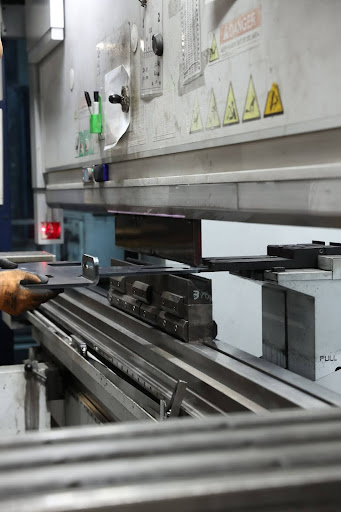
Precision Forming for Consistent, Production-Ready Parts
Our CNC press brake services are built for accuracy, repeatability, and clean finished appearance, whether you’re forming a single prototype, running short batches, or producing consistent parts at scale.
Press brake forming is a core part of modern fabrication because it allows flat metal components to become rigid, functional parts with precise angles, consistent bend lines, and tight fit-up for assembly.
At Zephyr, our press brake forming process is CNC controlled and design-driven, meaning bend sequences, bend angles, and backgauge positioning are programmed for consistency. This supports dependable repeatability across runs, reduces part-to-part variation, and helps keep assemblies aligned during welding and final build.
If your parts require reliable bends, crisp lines, and consistent geometry, CNC press brakes can reduce total fabrication time and improve overall part quality.
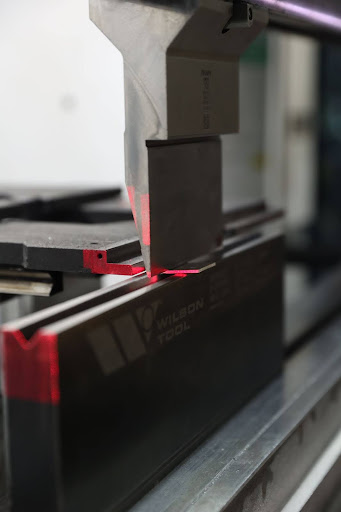
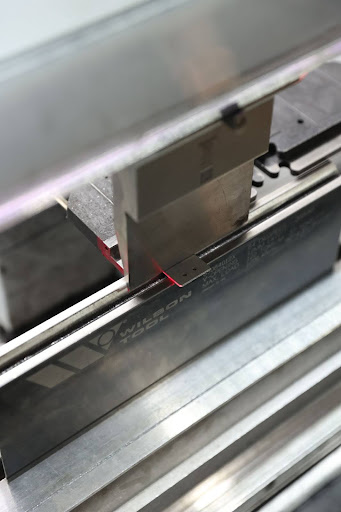
Why Press Brake Forming Matters
Metal forming is where good parts become great parts. Clean, consistent bends improve appearance, strengthen the component, and reduce headaches in downstream assembly.
When forming is done right:
- Parts fit together more naturally
- Weldments align faster
- Finished products look more professional
CNC Backgauging and Repeatable Accuracy
One of the biggest advantages of CNC press brakes is consistency. With CNC backgauging and programmed bend sequences, parts can be formed reliably and repeatedly-improving quality across every run.
Why CNC-Controlled Forming Matters
- Repeatable bends across prototypes, batches, and production runs
- Consistent part geometry for easier welding and assembly
- Reduced rework caused by bend variation or misalignment
- Faster setup and improved throughput for common bend programs
- Cleaner lines and a more professional finished appearance
Because the process is programmed, CNC press brake forming also supports revision control. If your design changes, bend programs can typically be updated efficiently – helping keep production moving without unnecessary delays.
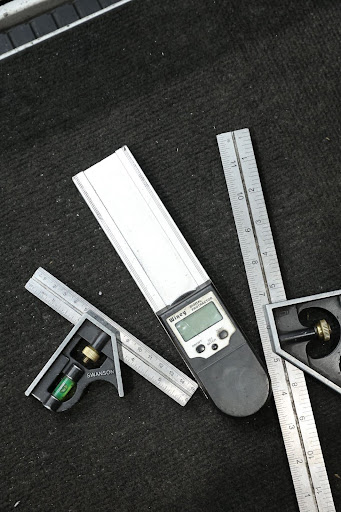
Forming for Fit-Up, Strength, and Appearance
Press brake forming doesn’t just change the shape of a part-it improves the entire fabrication outcome.
Accurate bends help:
- Increase part strength and rigidity
- Improve alignment for joining and fastening
- Reduce weld time and rework
- Deliver consistent, professional-looking finished parts
- Support repeatability for OEM and multi-run production
When forming is paired with accurate upstream laser cutting, precision machining, punch, or saw, the results are even stronger. Parts cut to consistent dimensions and then formed with CNC accuracy assemble faster, reduce total cost, and improve throughput.
Common Use Cases
CNC press brakes support a wide range of fabrication workflows, including:
- Forming panels, enclosures, and housings with clean bend lines
- Producing repeatable brackets and channels for production builds
- Creating reinforcement components that add rigidity without excess weight
- Improving weld fit-up through consistent geometry
- Supporting prototypes and iterative design work
CNC Press Brake FAQ
What is a CNC press brake used for?
A CNC press brake forms sheet metal or plate into precise angles and shapes. It’s commonly used for panels, brackets, enclosures, channels, and structural formed components.
What materials can you form?
We commonly support mild steel, stainless steel, and aluminum. Thickness and forming ranges vary by design.
Is press brake forming good for prototypes?
Yes. CNC press brake forming is ideal for prototypes because it supports efficient programming changes without hard tooling.
Can press brake forming reduce assembly and welding time?
Often, yes. Consistent bends improve fit-up and alignment, reducing rework and speeding up downstream fabrication.
How do I get started?
Send your drawings or CAD files along with material and quantity details to [email protected]. We’ll confirm manufacturability and recommend the best path forward. You can also learn more about our quality manufacturing standards before reaching out.