


Advanced Laser Cutting Equipment
Our laser cutting capabilities are supported by a diverse lineup of high-power fiber and CO₂ laser systems, giving us the flexibility and capacity to support prototypes, short runs, and production programs with consistent results.
Flat Sheet Laser Cutting Systems
- Trumpf TruLaser 5030 (8000W Fiber) – High-power fiber laser delivering fast cutting speeds, excellent edge quality, and consistent accuracy across a wide range of materials.
- Trumpf TruMatic 3000 (4000W Fiber) – Laser punch combination system ideal for parts with repeat features, formed details, and complex contours in a single setup.
- Amada FOM2RI 3015 (CO₂) – CO₂ laser system well-suited for smooth edge finishes, detailed profiles, and consistent flat sheet processing.
Tube & Profile Laser Cutting
- Trumpf TruLaser Tube 7000 (6000W Fiber) – 5-axis fiber tube laser supporting complex tube geometries, clean openings, and repeatable results for structural and frame components.
Flat Material Size & Thickness Capabilities
Our high-power fiber laser systems support cutting up to:
- 60″ x 120″ Sheet sizes
- Up to 1.00″ thick steel plate
- 0.75″ aluminum and stainless steel plate
- 0.188″ copper and brass
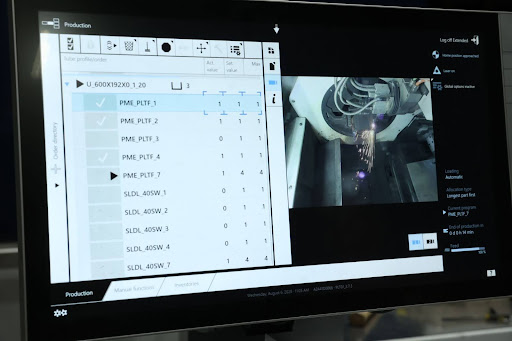
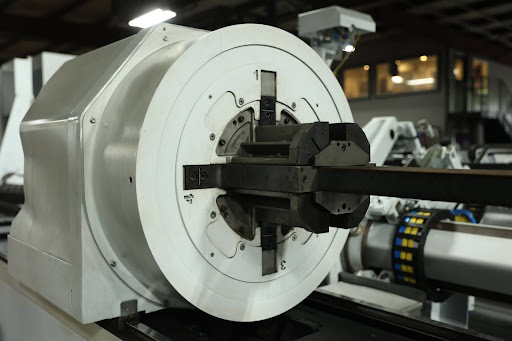
5-Axis Fiber Tube Laser Cutting
In addition to flat sheet cutting, we support 5-Axis fiber tube cutting for materials up to 10″ OD down to 0.500″ OD and up to 0.500″ wall thicknesses.
Tube laser cutting brings the precision and repeatability of laser technology to round, square, and rectangular tube designs along with other material shapes such as channel, angle, I-Beam and even extruded designs, allowing for clean openings, precise slots, and consistent profiles.
Why Fiber Tube Laser Cutting Matters
- Improved fit-up and alignment for welding and assembly
- Reduced need for secondary drilling or machining
- Onboard Flow Drilling for pushing material wall thickness further
- Onboard tapping function
- Cleaner, more professional finished appearance
- Consistent positioning for repeat runs and high-volume production programs
Tube laser cutting is especially valuable for frames, supports, handrails, and structural assemblies where alignment is critical. Instead of relying on manual layout and drilling, tube laser processing helps standardize parts and reduce variability, saving time and minimizing rework.
If you’re unsure whether tube laser cutting fits your application, we can review your design intent and recommend an approach that balances part quality, cost, and lead time.
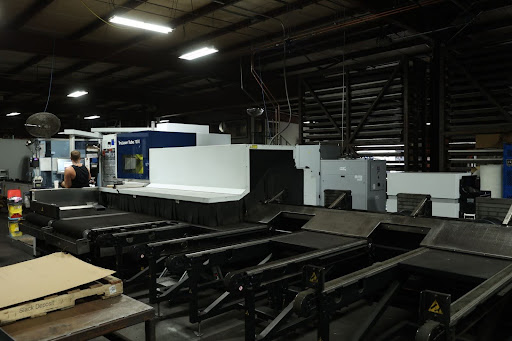
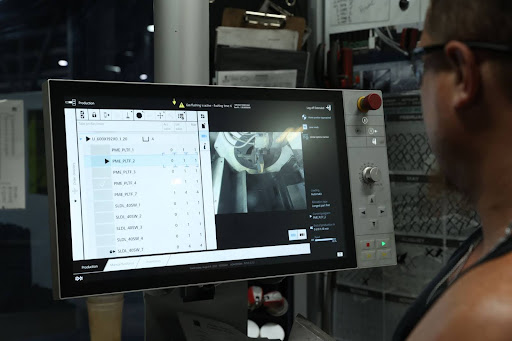
Laser + Punch Combination Processing
Laser Punch Combination (LPC) Processing
- 4,000W fiber laser punch combination system
- Supports material thicknesses up to 0.250″
- Bi-directional extrusion forming
- Integrated tap tooling onboard
This capability is ideal for parts requiring speed, repeatability, and complex feature integration.
Some parts benefit most from a blended approach—where high-speed punching handles repeat features efficiently, and laser cutting manages complex contours and fine details.
Laser + punch combination processing is ideal when your design includes:
- Standard hole patterns or repeat features that punch quickly
- Material bi-directional extrusion forming
- Certain tapping requirement functionality
- Complex outer profiles, contours, or cutouts best handled by laser
Benefits of Laser + Punch Combination Processing
- Faster cycle times on parts with repeat features
- Greater flexibility for complex geometry
- Reduced setup time and fewer process handoffs
- Efficient production for medium- and high-volume programs
By coordinating both processes in a single workflow, parts move through fabrication with fewer bottlenecks and less handling, helping maintain schedules and consistent quality.
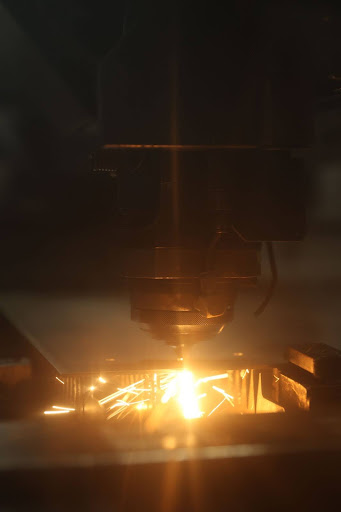
Clean Cuts, Fast Fabrication
We offer laser cutting services built for speed, repeatability, and clean part quality—whether you’re producing prototypes, short runs, or high-volume production parts. Laser cutting is one of the most efficient ways to turn flat stock and select profiles into accurate components with excellent edge quality, minimal secondary finishing, and consistent results from the first piece to the last.
At Zephyr, our laser cutting process is CNC controlled and design-driven, meaning your parts are produced from a programmed toolpath based on your drawings or CAD files. This supports high consistency, fast iteration, and simplified revision control. If your project requires tight profiles, clean holes, complex geometry, or a combination of punched and laser-cut features, our laser cutting capabilities help reduce total fabrication time and cost while improving finished appearance.
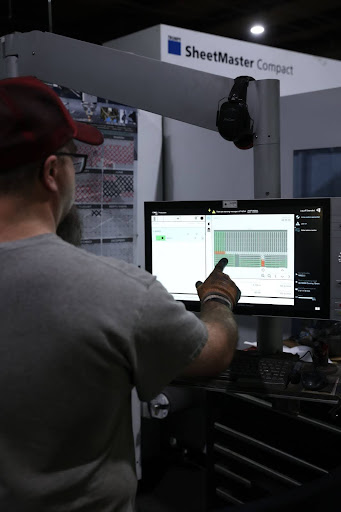
Why Laser Cutting Matters
There are many cutting methods available, but laser cutting stands out because it combines precision, throughput, and flexibility. It reduces material waste, supports complex designs, and enables repeatable accuracy that is difficult to achieve with manual processes.
From panels and brackets to structural elements and assemblies, laser cutting can:
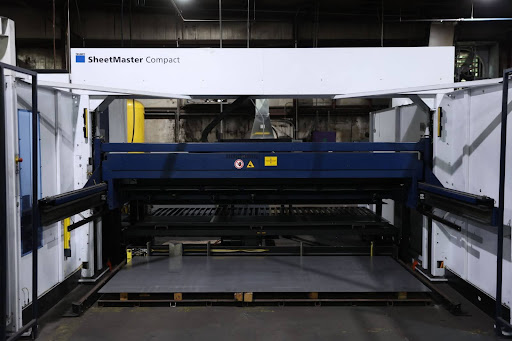
What We Cut
Laser cutting is ideal for a wide range of metal fabrication applications. We commonly support parts used in manufacturing, industrial equipment, OEM production, structural fabrication, and custom builds—anywhere accurate profiles and dependable repeatability matter.
Common Laser-Cut Part Types
- Brackets, tabs, and mounting plates
- Panels, covers, and enclosures
- Frames, gussets, and structural components
- Decorative and architectural elements
- Parts designed for welding, bending, or final assembly
We laser cut mild steel, stainless steel, and aluminum, with thickness ranges varying by material and part design. Our flexible approach allows us to support both lighter-gauge components and heavy-duty structural parts without forcing your project into a narrow, one-size-fits-all process.
Because laser cutting is digitally driven, it also supports rapid design changes. If you’re iterating on a prototype or refining a production design, updates can often be implemented quickly—without the delays or costs associated with hard tooling.
Why Laser Cutting Works
Laser cutting is more than simply “cutting parts.” It improves the efficiency, accuracy, and reliability of your entire fabrication workflow—especially when downstream steps include forming, welding, and final assembly.
Key Advantages of Laser Cutting
- Clean edge quality and strong aesthetics — Laser-cut edges are typically smooth and consistent, reducing the need for grinding or cleanup—especially valuable for visible or customer-facing components.
- Speed compared to manual cutting methods — CNC-controlled laser cutting scales efficiently from single parts to production runs, reducing manual layout and secondary operations.
- Repeatable, consistent results — Because parts are cut from a program, each piece matches the design intent—making laser cutting ideal for OEM and repeat production work.
- Reduced waste and better material usage — Laser cutting supports optimized nesting and yield, helping control material costs and reduce scrap.
- Better fit-up for forming and welding — Accurate profiles improve alignment during forming and welding, reducing rework and improving final quality.
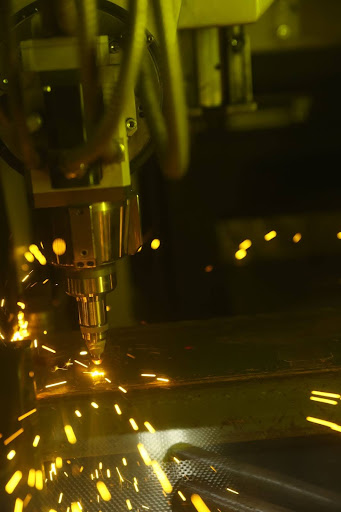
Common Use Cases
Laser cutting supports a wide range of fabrication workflows, including:
- Replacing multi-piece assemblies with fewer laser-cut components
- Producing consistent brackets and mounting plates for repeat builds
- Creating clean openings and patterns for panels and enclosures
- Preparing parts for press brake forming and welded assemblies
- Accelerating prototypes and design iterations
If you have drawings, CAD files, or even a concept sketch, we can help evaluate manufacturability and identify where laser cutting can reduce complexity and improve throughput.
Request a Quote
Ready to get started? Send us your drawings or CAD files along with material and quantity details, and we’ll help you determine the best approach for cost, lead time, and part quality.
Send quote requests to [email protected]. You can also learn more about our quality manufacturing standards before reaching out.
Laser Cutting FAQ
What materials can you laser cut?
We commonly support mild steel, stainless steel, and aluminum. If you have a specific material requirement, share your specs and we’ll confirm the best approach.
Is laser cutting good for prototypes?
Yes. Laser cutting is ideal for prototypes because setup is design-driven and changes can be implemented quickly without hard tooling.
Can laser cutting reduce welding and fabrication time?
Often, yes. Accurate profiles and consistent hole placement improve fit-up and reduce rework during forming, welding, and assembly.
Do you support production runs?
Yes. Laser cutting scales efficiently from one-offs to full production programs.
How do I get started?
Send your drawings and CAD files (step) with material and quantity information to [email protected], and we’ll help guide the process from design to production.